Choosing the Right Fast Fencer: Factors to Consider Before Making a Purchase
This is a subtitle for your new post
The body content of your post goes here. To edit this text, click on it and delete this default text and start typing your own or paste your own from a different source.
New Paragraph
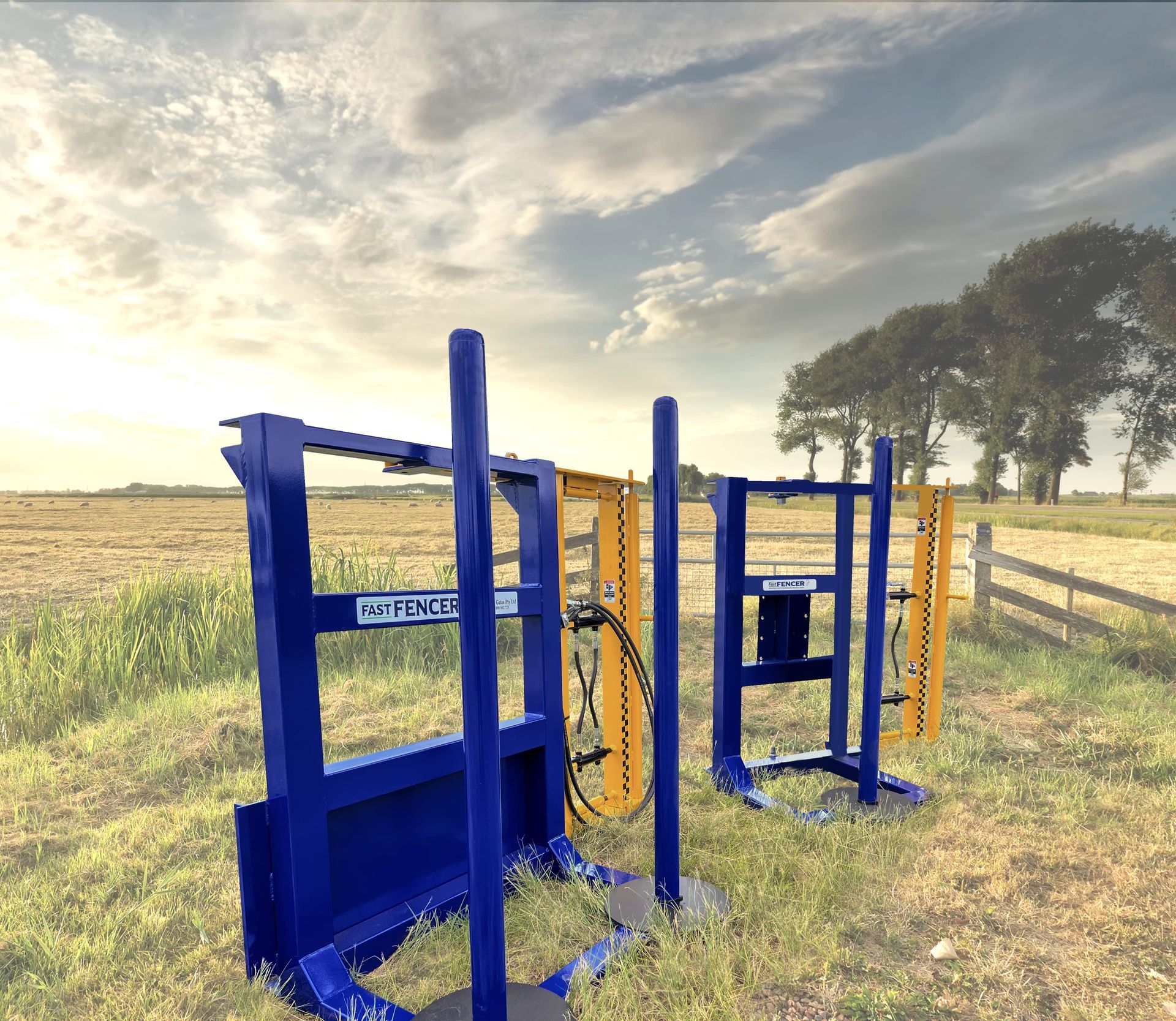
New ParagraIf you're a fencing contractor or a farmer, you've probably heard of the FastFencer in the industry of fencing. This game-changing piece of equipment, also known in the field as the “wire spinner” or the "quick fencer," revolutionises rural fencing. It makes the overall process of fencing safer, quicker, and less physically demanding or laborious. With FastFencer, not only do you build better fences, but you also save on labour costs. Let's analyse more deeply what different variants of FastFencer are to help you choose the right one for your needs.
Why Choose FastFencer?
Before getting into the specifics, let's first discuss as to why the FastFencer stands out. Even though it is only a piece of fencing equipment.
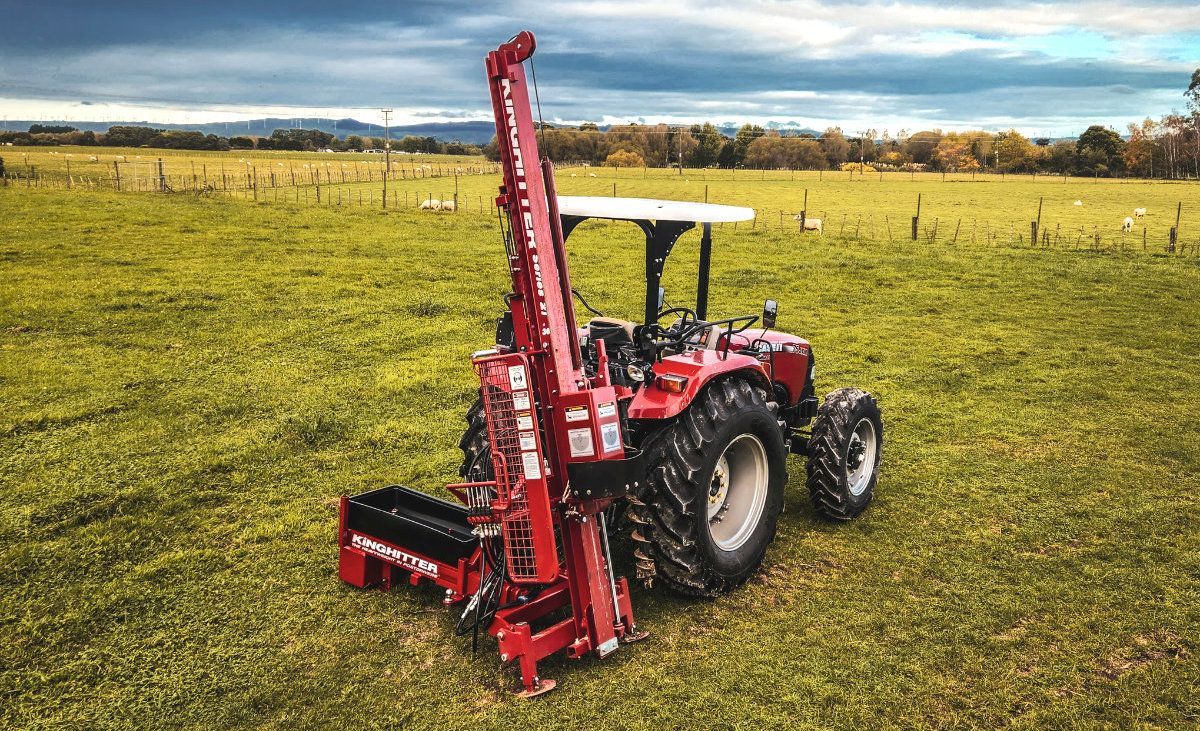
Imagine being able to pick up to three fencing mesh rolls at once, each up to 1.8 meters high and 250 meters long, in one go. The FastFencer offers this capability, and for larger projects, there's an option for 500-meter rolls. Its design includes clamps on both sides, allowing you to fence in either direction without hassle. Once you’ve picked up your rolls of netting, you simply tie it to your first strainer, run down the line, and tie it off at the next strainer by clamping the mesh tight from your cabin seat. Tensioning the wire is as easy as driving the machine forward. This simplicity and efficiency are what make FastFencer a trusted piece of equipment.
FastFencer 1300 Series
FFD1300/2400
The FFD1300/2400 is perfect for those with skid steers and smaller tractors. It’s compact and lighter, making it ideal for hilly terrains and smaller machines.
Capacity: Holds 3 rolls up to 250 meters each- Dimensions: 1300mm high x 2400mm wide x 850mm deep
- Weight: 540kg
- Ideal For: Running out standard hinge joint, fabricated netting, and Wallaby netting
- Best Uses: Sheep, goats, other livestock, tree protection, and internal/external fencing
This model is all about stability and ease of use on smaller machines. If you're dealing with challenging terrains and need a reliable, lightweight option, the FFD1300/2400 is a solid choice.
FFD1300/3000
Next, we have the FFD1300/3000, a wider variant that’s ideal for larger tractors, backhoes, loaders, and telehandlers. The extra width helps prevent the fence netting from snagging on wheels.
Capacity: Holds 3 rolls up to 250 meters each, with an option for 500 meters- Dimensions: 2100mm high x 3000mm wide x 850mm deep
- Weight: 780kg (800kg for the 500-meter roll model)
- Ideal For: Standard hinge joint, fabricated netting, Kangaroo proof fence, exclusion netting, and feral netting
This model is particularly useful for larger exclusion fencing projects, offering the flexibility and capacity needed for extensive fencing work.
FFD1300/2400/Side Shift
For added versatility, consider the FFD1300/2400/Side Shift. This model allows the entire Fencing Machine to move 300mm to the left or right, similar to forklift forks.
Capacity: Holds 3 rolls up to 250 meters each, with a 500-meter option available- Dimensions: 1300mm high x 2400mm wide x 850mm deep
- Weight: 580kg (heavier base for 500-meter option)
This side shift feature is a game-changer, enabling you to extend the reach of your FastFencer without moving the parent machine. It’s perfect for both hilly and open country, and the compact width ensures it can be transported easily without being classified as a wide load.
FastFencer 2100 Series
FFD2100/2400
Moving on to the FFD2100 series, the FFD2100/2400 is designed for telehandlers, small tractors, loaders, and backhoes. It’s built robustly to handle larger rolls.
Capacity: Holds 3 rolls up to 250 meters each, with a 500-meter option- Dimensions: 2100mm high x 2400mm wide x 850mm deep
- Weight: 710kg (740kg for the 500-meter roll model)
- Ideal For: Major vermin fence projects, standard hinge joints, fabricated netting, and more
If you're tackling significant fencing projects, this model’s heavier base and reinforced structure make it a reliable choice.
FFD2100/3000
The FFD2100/3000 is a wider option in the 2100 series, perfect for larger tractors and machines, ensuring the fence netting doesn’t get caught on the wheels.
Capacity: Holds 3 rolls up to 250 meters each, with a 500-meter option- Dimensions: 2100mm high x 3000mm wide x 850mm deep
- Weight: 780kg (800kg for the 500-meter roll model)
- Ideal For: Standard hinge joint, fabricated netting, exclusion netting, and more
This model is particularly well-suited for exclusion fencing projects, thanks to its capacity and robust build.
FFD2100/2400/Side Shift
Lastly, the FFD2100/2400/Side Shift variant offers the same side-shifting capability as its 1300 counterpart, providing an extended reach without moving the parent machine.
Capacity: Holds 3 rolls up to 250 meters each, with a 500-meter option- Dimensions: 2100mm high x 2400mm wide x 850mm deep
- Weight: 830kg (850kg for the 500-meter roll model)
This model combines capacity, versatility, and ease of transport, making it ideal for both challenging terrains and open fields.
Making An Informed Choice
When choosing the right FastFencer variant, consider the following:
Machine Compatibility: Match the FastFencer to your existing machinery, whether it's a skid steer, tractor, backhoe, loader, or telehandler- Terrain: For hilly and challenging terrains, lighter and more compact models are preferable
- Project Scale: Larger projects, especially those involving exclusion fencing, benefit from models with 500-meter roll capacities
- Flexibility: The side shift feature provides additional manoeuvrability without moving the parent machine, useful for precise and efficient fencing
By carefully evaluating your specific needs and the capabilities of each FastFencer variant, you can be sure that you are selecting the right tool for the job. Making your fencing projects quicker, safer, and more efficient is that simple. For a quote or more information, visit the QuikFence website, they are the leading fencing equipment suppliers.
The Post by QuikFence