Why a FastFencer Is a Must-Have for Large-Scale Fencing?
This is a subtitle for your new post
The body content of your post goes here. To edit this text, click on it and delete this default text and start typing your own or paste your own from a different source.Why a FastFencer Is a Must-Have for Large-Scale Fencing?
Fencing is what many businesses rely on for security and organising, agricultural businesses especially depend on it for daily tasks. Whether it is used in large-scale farming, property management, or security purposes, fencing is essential for smooth operations. However, such an important feature comes with problems like being time-consuming, labour-intensive, and physically demanding. On larger properties fence installation is time consuming and expensive. FastFencer, a game-changing piece of equipment, simplifies how rural fencing is done. This is a bookmarking blog for people associated with the agricultural industry and fencing contractors. Let’s start with it now!
What Is a FastFencer?
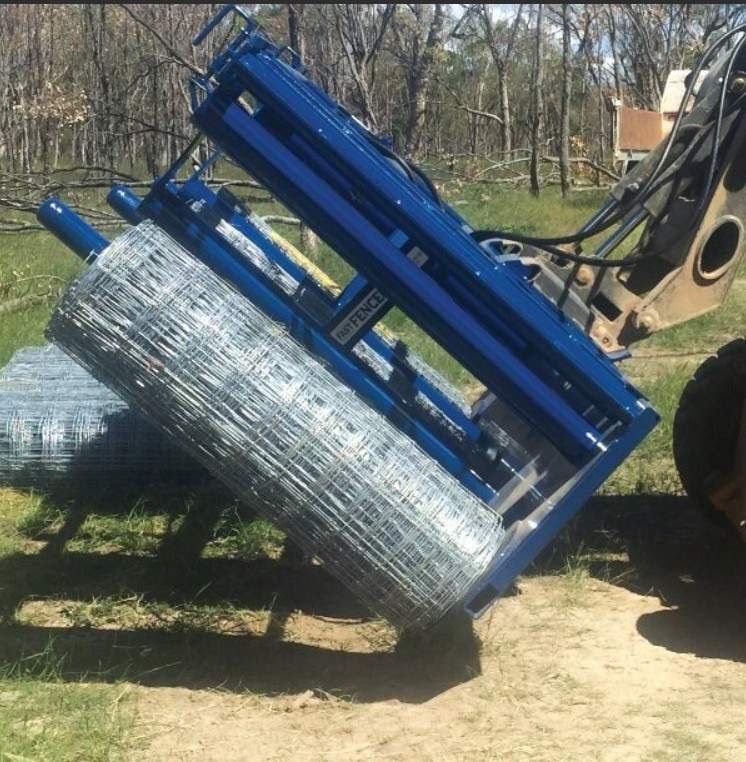
The FastFencer is a specialised piece of equipment designed to streamline and simplify the process of erecting rural fences. Often referred to as the "wire spinner" or "quick fencer," the FastFencer is a machine that makes fencing not only quicker but safer and less physically taxing for both contractors and farmers. It’s specifically designed to address the challenges of large-scale fencing, making it an indispensable tool for anyone working with extensive fencing projects.
The standard FastFencer is designed to pick up to three fencing mesh rolls, each between 900mm and 1.8 metres high, and up to 250 metres in length, in a single lift. For larger feral fence projects, an option is available for rolls up to 500 metres long, making it an even more powerful tool for vast properties.
Enhanced Features for Large-Scale Projects
The FastFencer is designed for large-scale feral exclusion fencing projects, ideal for broadacre farms needing to protect crops and livestock from animals like wild dogs, kangaroos, and pigs. It can be upgraded to carry fencing rolls up to 500 metres, reducing downtime and improving efficiency. Compatible with various mesh sizes from 900mm to 1.8 metres, the FastFencer is versatile enough for both standard livestock and high-tensile feral fences, making it an essential tool for diverse fencing needs.
Key Benefits of Using a FastFencer
Massive Savings on Labour Costs
Fencing takes a lot of labour, especially on large rural properties. Traditionally, fencing projects required a team of workers to perform tasks like manually unrolling and tensioning wire mesh. With the FastFencer, these jobs can be finished by one operator, negating the need for so much labour. This results in labour cost savings because it can carry and tension multiple rolls of wire at once.
As fencing contractor jobs and farm maintenance costs rise, the ability to reduce labour needs becomes essential. The FastFencer offers an efficient solution that reduces both the workforce and time required to complete large fencing projects.
Improved Safety
Fencing tasks can be very difficult and dangerous especially when they are located on rough areas or uneven grounds. Injury is unavoidable while managing the bulky rolls of wire mesh as well as adjusting its tensioning manually. Safety was an underlying consideration for this FastFencer machine. It achieves this by allowing operators to carry out most of their duties from the ease of an operator’s chair thereby relieving them from manual lifting, strain and even going physical with such materials.
The FastFencer’s clamps, located on both sides of the machine, also improve safety by allowing the operator to work efficiently in either direction around the property, reducing unnecessary movements and potential risks.
Quicker Fencing Projects
Time is money, especially in farming. The FastFencer enables fencing projects to be completed in a fraction of the time it would take using traditional methods. After lifting up to three rolls of fencing mesh, the operator can quickly tie the first roll to a strainer and simply drive the machine forward to unroll and tension the wire when ready. Once the mesh is aligned, it can be clamped tightly from the operator’s cabin, ensuring precision and consistency throughout the fence line. This reduces the time spent walking back and forth to adjust or tension the wire, making the entire process significantly faster.
For large properties requiring kilometres of fencing, the FastFencer's ability to pick up multiple rolls and work efficiently in both directions means that massive areas can be fenced in a relatively short time. This allows farmers and contractors to move on to other tasks more quickly, boosting productivity.
How to Use a FastFencer
A FastFencer operator should be well-versed with the working of the machinery before using it. FastFencer is designed for fencing contractors and farmers, keeping ease of use in mind. With proper knowledge and practice, an operator can quickly get to work, without the need for extensive training. Here’s a basic overview of how the FastFencer works:
- Loading the Rolls: Place the three rolls on the ground and line up with the three spikes. Drive forward ensuring the three poles are fully in the rolls, before vertically raising the rolls with your parent machine. DO NOT vertically lift the rolls until you have done this. The mesh rolls will not smoothly slide down the poles and will grab. Over time this will bend the poles and adversely effect the smooth efficient unraveling of the rolls.
- Driving without tension: From the operator's cabin, drive the machine forward along the fence line. The mesh will unroll evenly as the machine moves, and the wire can be tensioned by driving the machine forward to the desired level when it’s time to tie it off.
- Tying Off the Wire: Once the rolls are in place, tie the first roll to the starting strainer. Using the clamping mechanism, the operator can clamp the wire tight from their cabin seat, ensuring precision without manual adjustment.
- Join the next roll: At any stage the operator will need to join the three rolls together. This process is so much easier with the rolls vertical firmly in place on the Fast Fencer.
- Finished the three rolls: Depending on the length of the rolls used, you can reloaded and go again. If you’ve just put up 1.5k of fence, you may just call it a day!
Why You Need a FastFencer for Your Property?
For large-scale rural operations, time and labour savings are crucial. Investing in a FastFencer can reduce fencing costs, improve worker safety, and complete fencing projects more quickly and efficiently. Whether you’re a fencing contractor, a farm owner, or managing a large property, the FastFencer is a must-have piece of equipment for anyone looking to improve their fencing processes.
If you're looking for a FastFencer for sale, explore the options available to find the right model for your needs. With its ability to handle large-scale fencing projects and its versatility, the FastFencer is an investment that pays off in reduced labour costs and increased productivity.
Simplifying Large-Scale Fencing with the FastFencer
Large-scale fencing is very demanding in terms of labour and time as a vast part of the property is covered. The FastFencer stands out as a game-changer for every rural worker, saving them time, and labour costs, increasing productivity, and a safe procedure. For livestock enclosure, feral animal exclusion, and property boundaries, FastFencer is an essential tool that excels on all fronts.
The Post by QuikFence